A dealmaker can arrive in Astana to discuss a rail project in western Kazakhstan, meet a financial adviser working under English law, speak with a regulator about a regional fund, and leave with a clearer view of the trade route linking China, the Caspian, the Caucasus, and Europe. The city’s significance sits inside that compressed itinerary.
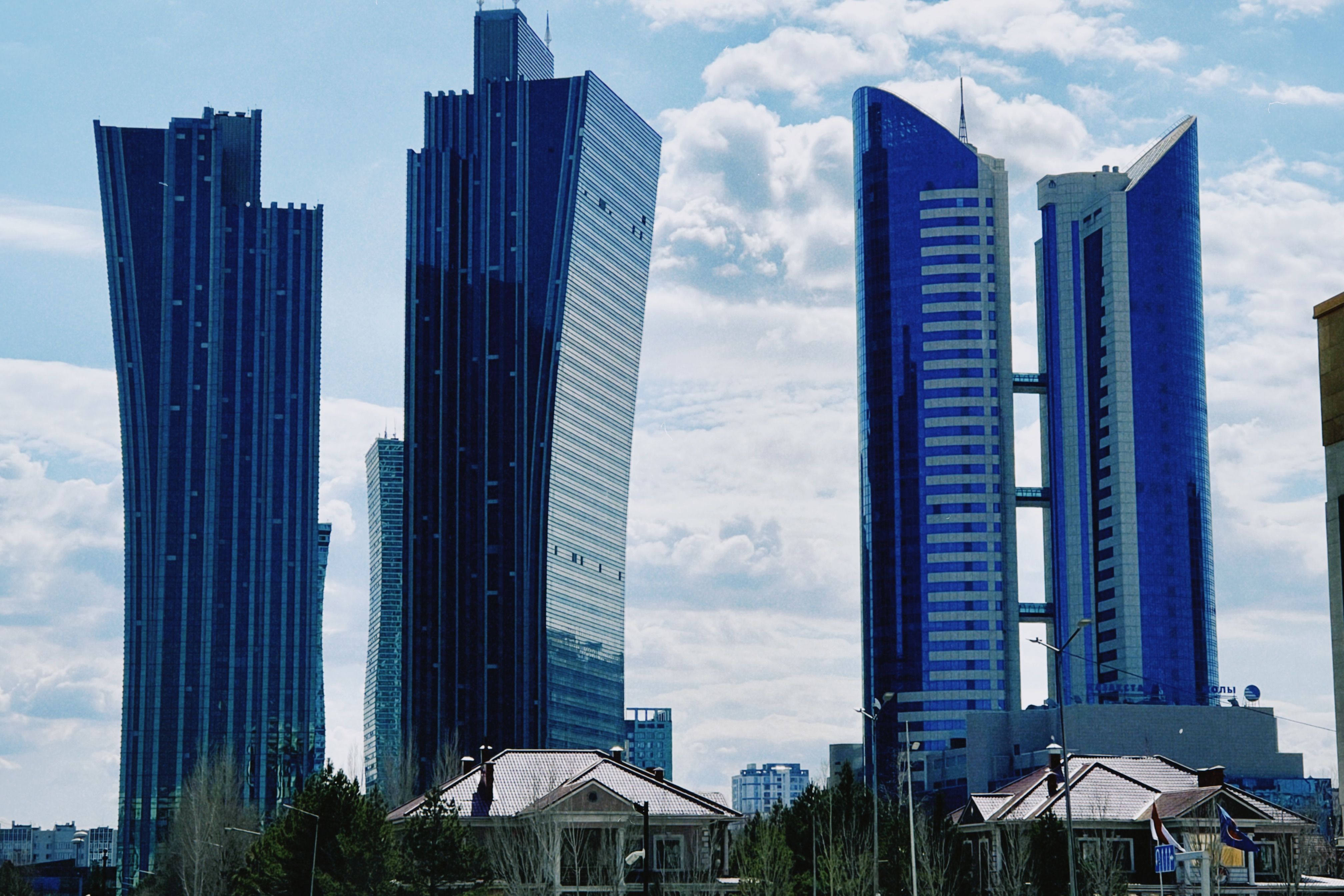
Astana is being assembled as an access point to a much larger system. Its financial center is attracting international companies and capital, while Kazakhstan invests in rail, ports, terminals, airports, and digital trade systems along the Middle Corridor. The proposition matters to executives and investors because physical infrastructure and institutional infrastructure are beginning to meet in the same national capital.
The capital layer is expanding. The Astana International Financial Centre reported on 26 December 2025 that its participants attracted $6 billion during the year, including $4 billion in portfolio investment and $2 billion in investment by AIFC participants. More than 1,400 companies joined during 2025, taking total registrations above 4,900 companies, representing more than 90 countries. AIFC also reported more than $20 billion raised for Kazakhstan since its 2018 launch.
Those figures belong to AIFC’s own reporting, so they describe institutional scale rather than independent proof of productive investment, operating depth, or investor returns. Their strategic meaning is still important. Astana has been given a financial and legal platform designed to make Kazakhstan legible to international capital, with an exchange, regulated services, an independent court and arbitration center, and a corporate environment built to attract regional activity.
An executive evaluating Central Asia can therefore use Astana for more than a government meeting. The city offers a concentrated route into advisers, banks, project sponsors, regulators, lawyers, infrastructure operators, and companies seeking capital. That density reduces the search cost attached to an unfamiliar market. It also gives the city a role in regional business that cannot be measured through passenger numbers alone.
The physical corridor is moving. Kazakhstan’s position between China, Central Asia, the Caspian, the Caucasus, and Europe has always carried geographic value. Geography becomes commercially meaningful when it is supported by predictable routes, usable terminals, efficient border systems, and financing that allows infrastructure to expand.
The World Bank’s Middle Corridor assessment has described the route’s potential in ambitious terms. Coordinated investment and efficiency measures could halve travel times and triple trade flows by 2030. The same assessment identifies the weaknesses that stand between the model and the market, including port operations, rail interfaces, border processes, corridor coordination, and fragmented digital systems.
That tension gives Astana a more interesting role than the familiar image of a capital positioned between markets. Kazakhstan is attempting to assemble linked assets across the route. In July 2025, the Prime Minister’s Office described a container terminal at Georgia’s Port of Poti with a designed capacity of 120,000 TEUs a year. The announcement also recorded more than 159,500 tonnes of first-half rail freight between Kazakhstan and Georgia, an increase of 67 percent year on year.
The commercial question sits after the announcement. Can an exporter receive a dependable door-to-door service? Can a freight operator price risk accurately? Can an investor see where revenue begins, where public support ends, and where operational friction remains? Capacity on paper matters less than the quality of handoffs between rail, port, customs, shipping, and data systems.
Rail gives the thesis weight. A proposed World Bank operation for Kazakhstan includes a 366-kilometer Kyzylzhar–Mointy rail investment and an expected route reduction of roughly 150 kilometers. The project also addresses Kazakhstan Temir Zholy’s access to private capital and its preparation for a potential initial public offering. The significance lies in the combination of transport engineering and financial reform. A railway becomes more investable when its operator can present a clearer balance sheet, stronger governance, and a credible path to capital.
Rail infrastructure creates a wider opportunity set around the track itself. Rolling stock, terminals, warehousing, customs technology, freight forwarding, cargo insurance, trade finance, and supply-chain data all gain value when a route is being made more usable. The strongest investors may therefore sit beside the corridor rather than inside its most visible construction projects.
Astana’s relevance comes through coordination. Aktau, Kuryk, Almaty, Khorgos, Poti, Baku, and the border crossings may carry more direct responsibility for cargo movement. Astana can still become the place where the financing, regulation, procurement, and commercial partnerships behind those assets are negotiated. The capital is a control room for a network that extends well outside its skyline.
People still have to move. Rail may carry the goods, yet executives carry the decisions that finance, manage, inspect, and govern those goods. Kazakhstan reported direct flights to 31 countries and more than 30 new routes in 2025, including links with Budapest, Munich, Xi’an, and Guangzhou. National aviation plans also include airport and navigation upgrades, expanded cargo and passenger infrastructure, and preparation for a second runway at Astana’s airport.
These developments strengthen the city’s usefulness to a globally mobile business community. They also require restraint in the way the story is told. Planned terminals and a second runway signal direction and capital commitment. Astana’s status as a completed global hub will depend on route frequency, seasonal reliability, transfer quality, cargo throughput, and delivery schedules.
A business traveler may judge the city through a simpler calculation. Can one trip produce meetings with the AIFC, a government agency, a bank, a logistics company, and an infrastructure sponsor? Can the visitor reach a regional operating site without losing several days to connections? Can a project team return often enough to build trust? Astana’s gateway proposition becomes real when those questions receive consistent answers.
Friction creates the market. The World Bank identifies weak coordination, inefficient Caspian and Black Sea port operations, rail and port interfaces, border delays, and fragmented data as persistent constraints. Maritime legs can experience vessel shortages, documentation errors, and unpredictable dwell times. These problems weaken the corridor’s reliability while creating demand for companies that can remove uncertainty.
That is where the investor story becomes more compelling. A route under construction needs software that makes documents travel with cargo. It needs insurance products that price multimodal risk. It needs warehouses that understand changing inventory patterns, financial products that bridge longer transit times, and operators capable of managing several jurisdictions without turning each handoff into a new administrative problem.
Astana’s opportunity therefore depends on the value of coordination. Its financial center can help organize capital. Its public institutions can shape infrastructure priorities. Its advisers and professional-services firms can translate local rules for international companies. Its airport can shorten the distance between decision-makers and operating assets. Each layer supports the others only when delivery is visible and performance can be measured.
The credibility test remains ahead. AIFC’s reported capital, company registrations, and listings show a platform gaining scale. Kazakhstan’s rail and terminal announcements show a country attempting to turn geographic position into a functioning trade network. Air-route expansion makes the capital easier to reach.
The World Bank’s bottleneck analysis explains why the system still carries material operational risk.
Investors should therefore separate three types of access. Physical access concerns rail lines, ports, terminals, operating sites, and markets. Capital and legal access concerns AIFC structures, financing, regulated services, and dispute resolution. Decision-maker access concerns the ability to meet the people who allocate, regulate, build, and use the system. Astana’s first-mover value sits at the intersection of these three forms of access.
Astana can matter to the corridor without handling every container. Its stronger role is the place where the corridor can be understood, financed, governed, and improved. That position would give the city a durable commercial identity outside its status as Kazakhstan’s political capital.
The strongest reason to watch Astana is therefore practical. Kazakhstan is trying to make a complex Eurasian route more legible to capital, more accessible to executives, and more dependable for trade. The work remains incomplete, and the gaps are visible. Those gaps may become the city’s greatest source of opportunity because every unreliable handoff points toward a service, asset, or institution capable of making the network work better.